Treasures of the Orient
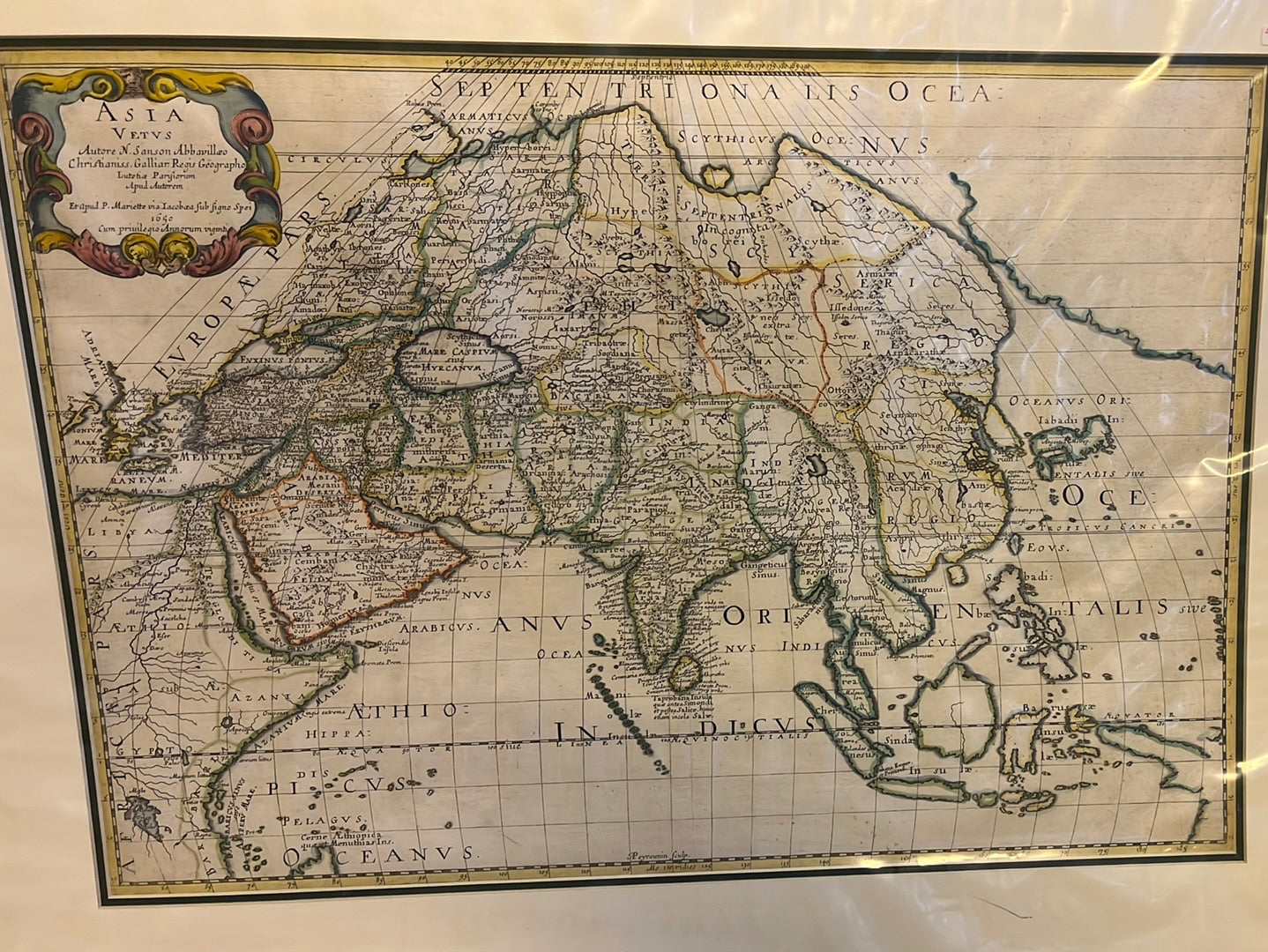
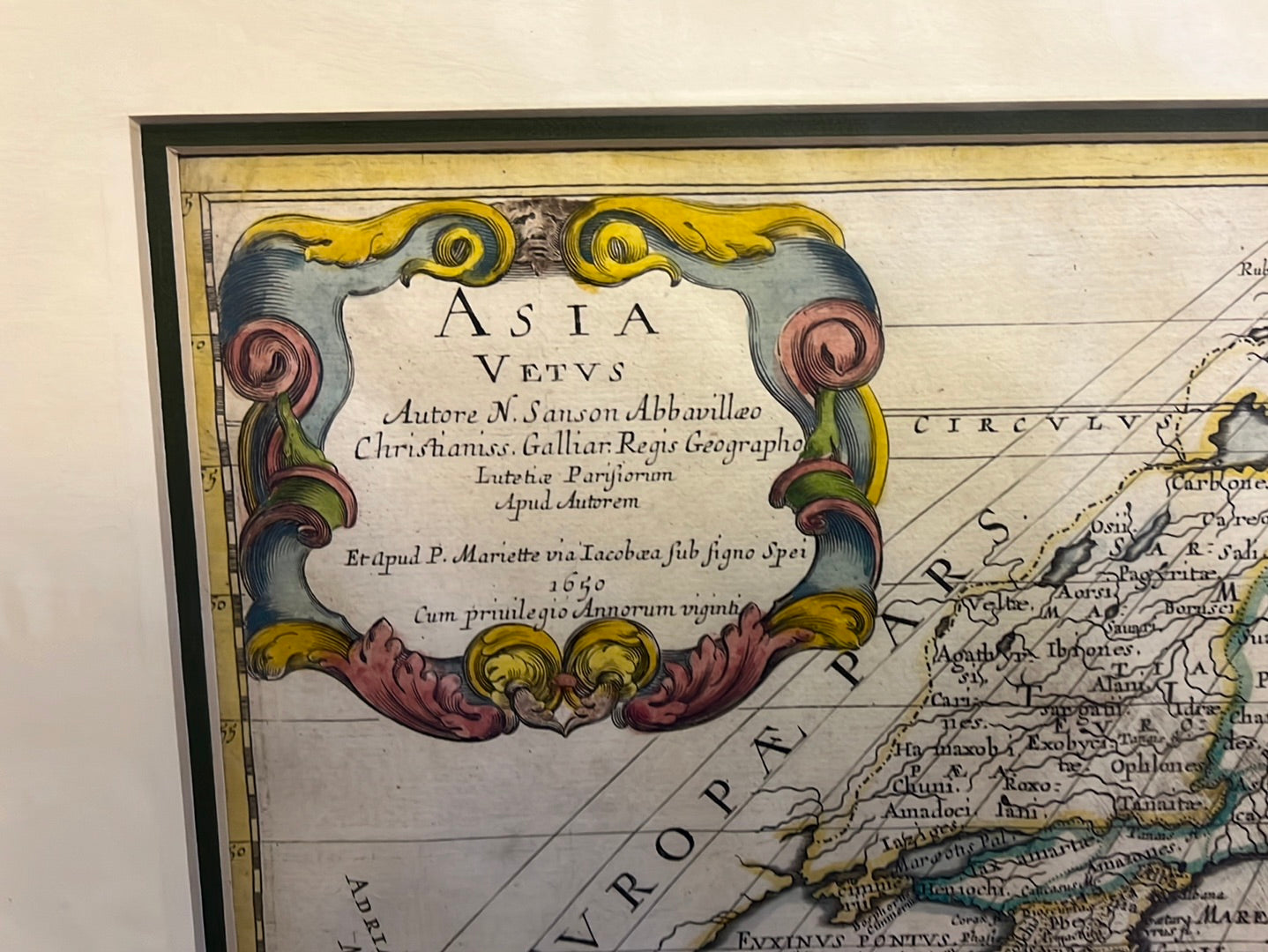
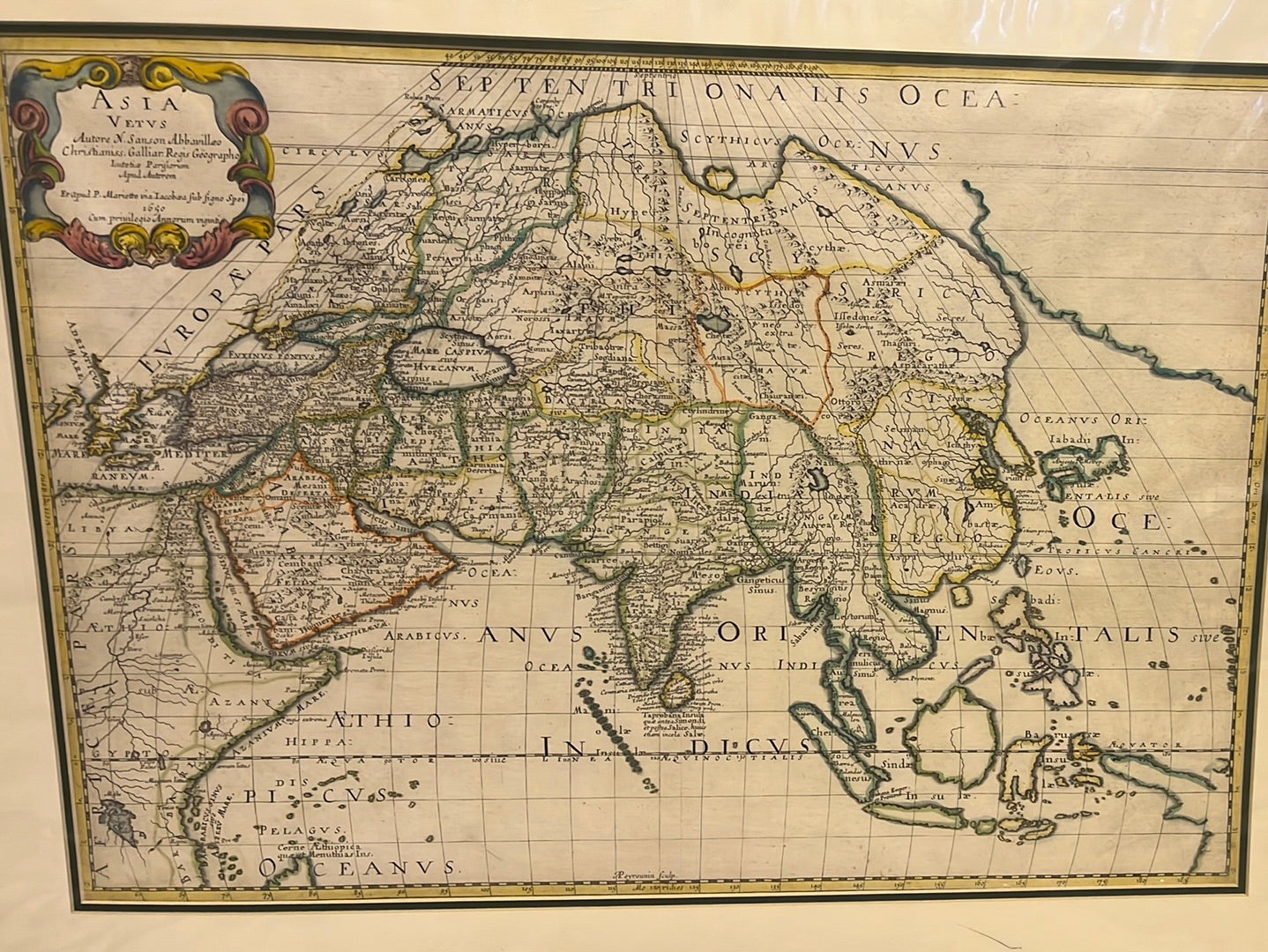
Asia Vetus - Sanson, 1650
Asia Vetus - Sanson, 1650
Asia Vetus (Ancient Asia)
Drawn by: Nicolas Sanson (the Elder)
Published in: Paris by Pierre Mariette
Year: 1650 (dated)
From: Cartes Générales de toutes les parties du Monde
Condition: Copperplate engraving with hand coloring
A Vision of Ancient Civilization Through a 17th-Century Lens
This striking 1650 engraving by Nicolas Sanson, often hailed as the "father of French cartography," represents a fascinating intersection of modern geographic knowledge and classical history. While the outline of the continent reflects the maritime discoveries of the mid-17th century, Sanson intentionally filled the interior with the toponymy and boundaries of the ancient world as recorded by classical geographers like Ptolemy.
Geographic Curiosities & Classical Myths
As one of the earliest folio-sized maps produced by the emerging French school, this piece captures several notable cartographic misconceptions of the era:
- Island Korea and Japan: Korea is depicted as a distinct, elongated island, while Japan is shown in an early "Teixiera model" configuration without Hokkaido.
- The Mythical Chiamay Lacus: To the west of China, Sanson includes the fictional Lake Chiamay, shown with five major rivers flowing south into Southeast Asia.
- The Northwest Coast of America: An extensive, unnamed American coastline is visible in the upper right, separated from Asia by a narrow strait—a reflection of early speculative theories about a short passage between the two continents.
- The Ancient Frontier: The map labels historical civilizations such as Assyria, Scythia, Persia, and the legendary Aurea Chersonesus (the Golden Chersonese) in the Malay Peninsula.
Artistic and Historical Legacy
Produced in partnership with the publisher Pierre Mariette, this map was instrumental in shifting the center of European mapmaking excellence from Amsterdam to Paris. The elaborate baroque title cartouche in the upper left serves as a signature of Sanson's clean, modern style, which prioritized research and clarity over the purely decorative flourishes favored by his Dutch rivals.
