Treasures of the Orient
British North Borneo - Illustrated London News 1887
British North Borneo - Illustrated London News 1887
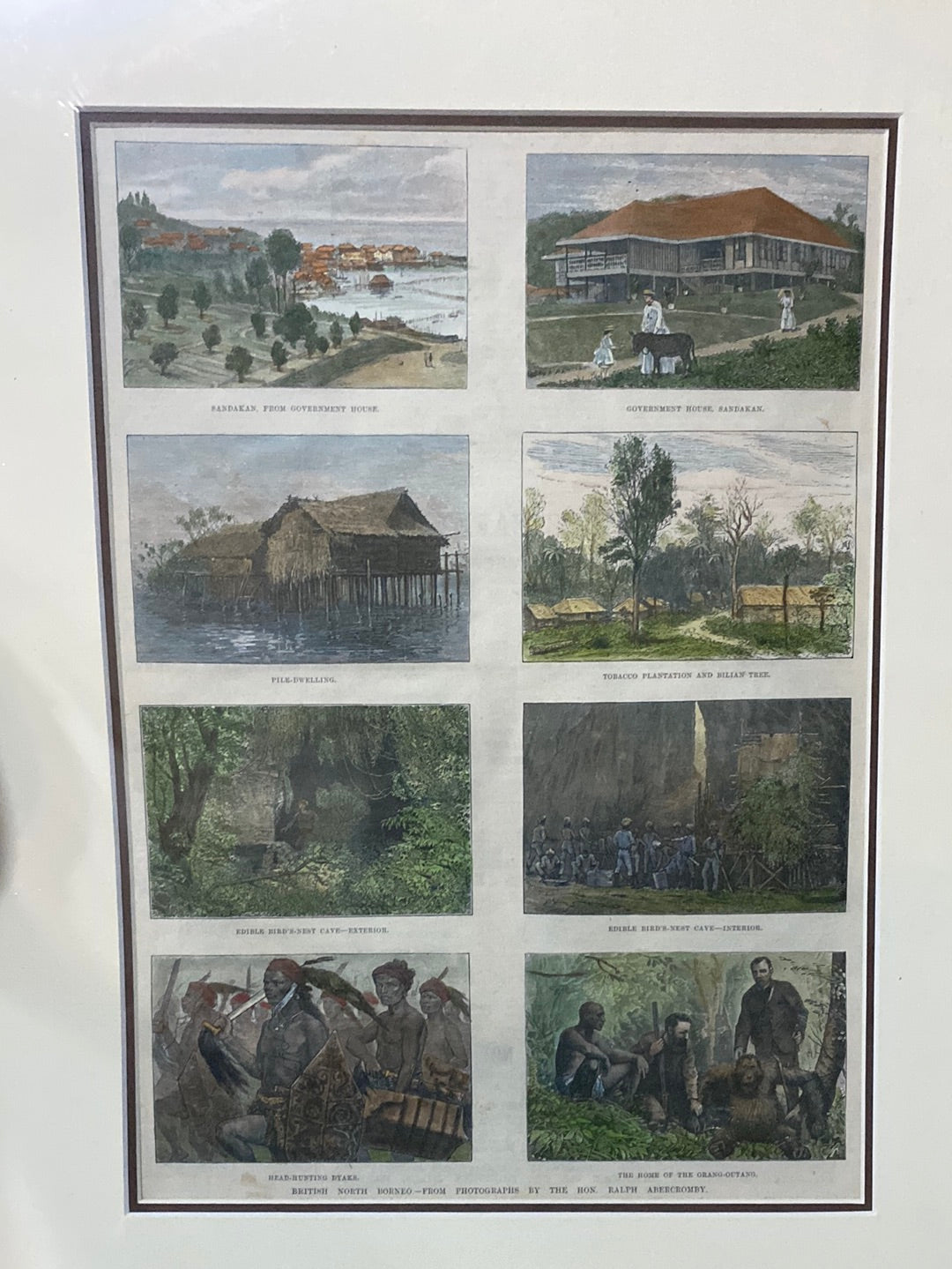
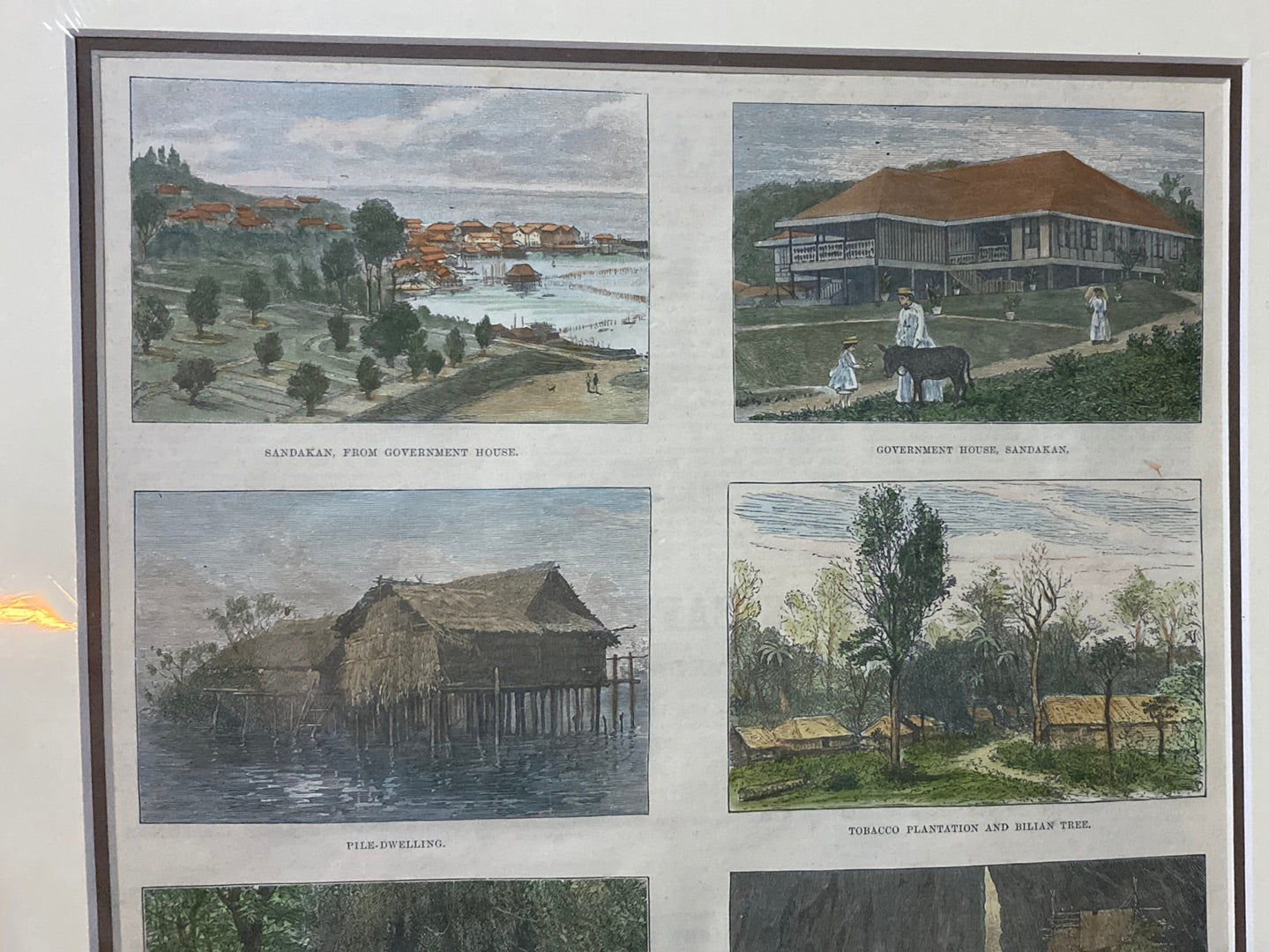
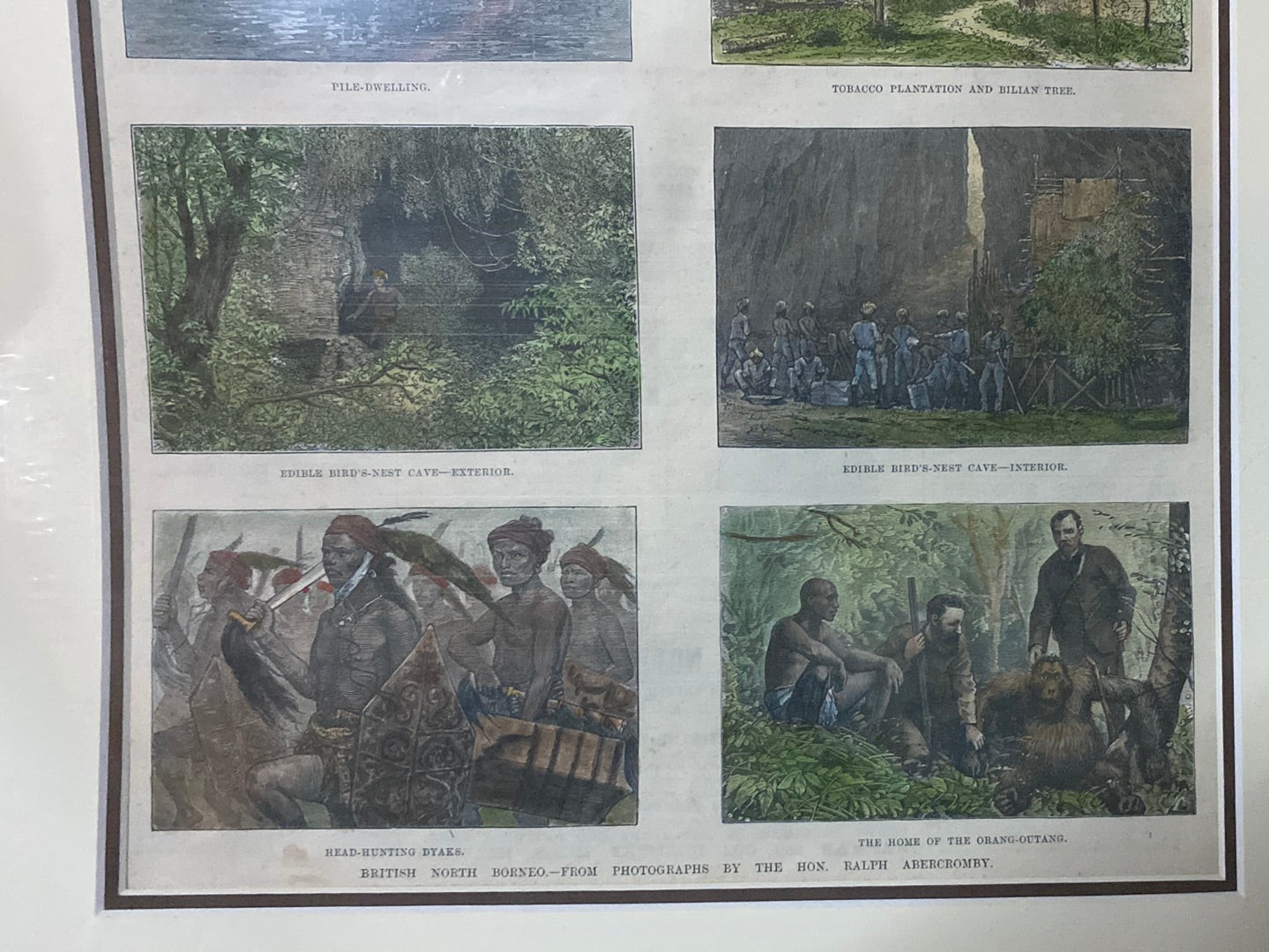
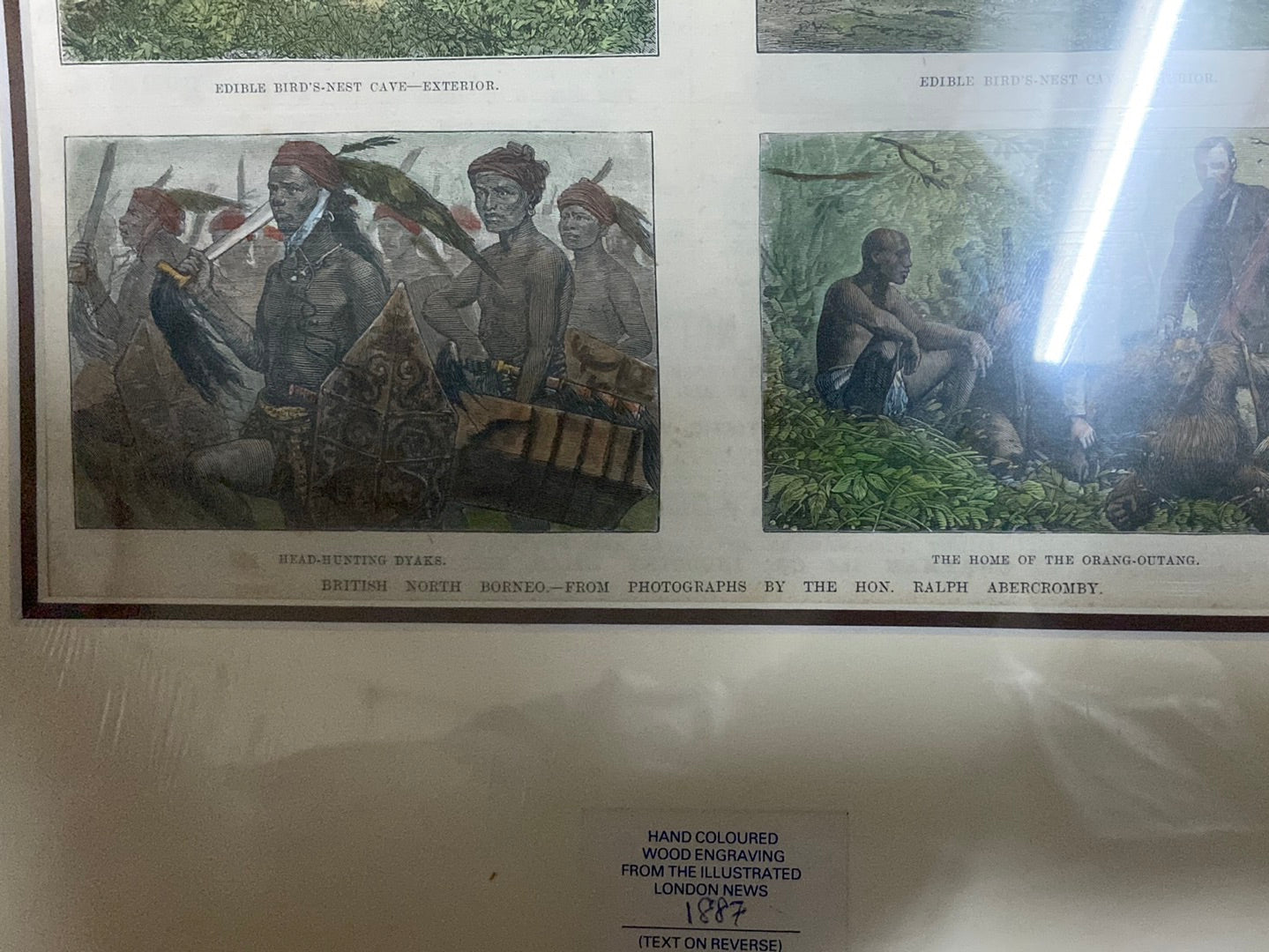
Title: British North Borneo—From Photographs by the Hon. Ralph Abercromby
Artist/Photographer: The Hon. Ralph Abercromby
Publisher: The Illustrated London News
Origin: London, United Kingdom
Date: c. 1885–1890
Technique: Hand-coloured wood engraving
A Window into the Chartered Territory
In the late 19th century, North Borneo was a frontier of the British Empire, administered not by the Crown directly, but by the North Borneo Chartered Company. This plate tells the story of an era when the "mysterious East" was being systematically documented for a curious Victorian public. Through the lens of the Hon. Ralph Abercromby, an intrepid traveler and meteorologist, these eight vignettes offer a curated glimpse into the administrative, economic, and cultural life of a region rarely seen by Europeans.
The sheet is a study in contrasts: the orderly, red-roofed Government House in Sandakan represents the imposition of British law and colonial social life, while the depictions of Head-Hunting Dyaks and Pile-Dwellings emphasize the "exotic" and "untamed" nature of the territory. It captures the early commercial heartbeat of the colony, from the hazardous collection of Edible Bird's Nests in limestone caves to the nascent Tobacco Plantations that would soon define the local economy.
Chronicles of the Plate
-
The Photographer's Eye: The Hon. Ralph Abercromby was not a professional illustrator but a scientist. His reliance on photography for these sketches lent them a level of ethnographic realism that was highly prized by the Illustrated London News for its "authenticity."
-
Sandakan: The First Capital: The two top images show Sandakan, the administrative heart of North Borneo. At the time, it was a burgeoning port city, often called the "Constantinople of the East" due to its strategic position and multicultural population.
-
Economic Foundations: The middle vignettes document two of Borneo's most famous exports. The Edible Bird’s Nest industry was a vital link to the Chinese market, while the Tobacco Plantation illustrates the early agricultural shift toward cash crops.
-
The "Home of the Orang-Outang": The final image reflects the Victorian fascination with natural history and the newly popularized theories of evolution, showing European explorers encountering the great apes of the Bornean jungle.
