Treasures of the Orient
Commelin’s "Begin ende Voortgangh" (1646)
Commelin’s "Begin ende Voortgangh" (1646)
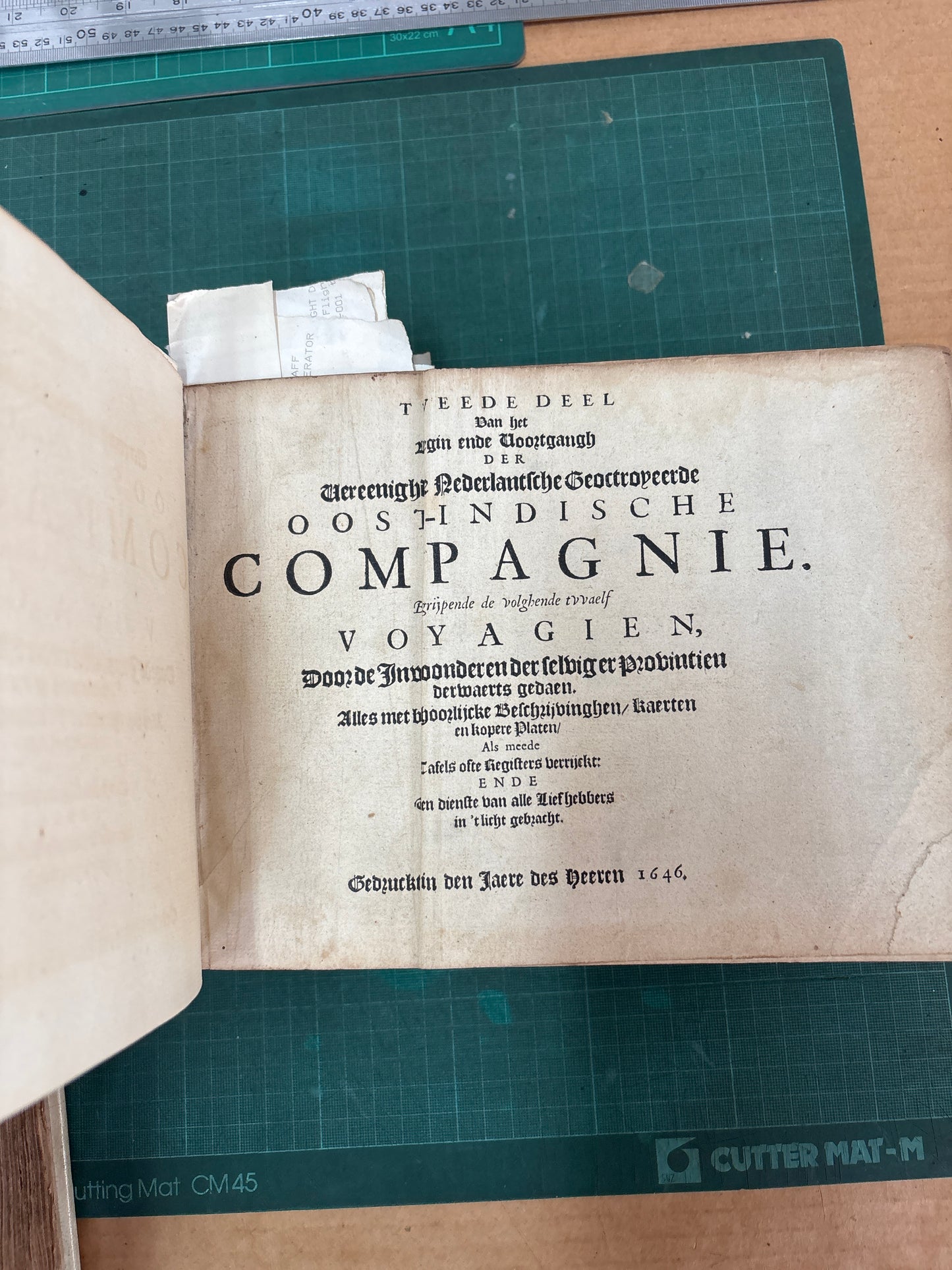
Commelin’s "Begin ende Voortgangh" (1646) – Complete Two-Volume Set
Title: Begin ende Voortgangh Vande Vereenigde Nederlantsche Geoctroyeerde Oost-Indische Compagnie (The Beginning and Progress of the United Netherlands Chartered East India Company)
Editor: Isaac Commelin
Origin: Amsterdam, Netherlands
Date: 1646
Technique: Two volumes, containing numerous copperplate engraved maps, coastal profiles, and ethnographic plates.
The Definitive Chronicle of the Spice Trade
This monumental two-volume set is the "Bible" of Dutch maritime exploration. It tells the definitive story of how a small group of Dutch merchants transformed into the world’s first global corporation, the VOC. Before this publication, the journals of the early voyages to the East Indies were often kept as state secrets; Commelin’s work brought these harrowing and triumphant stories to the public for the first time.
Within these pages are the firsthand accounts of the most legendary voyages in history, including the first Dutch fleet to reach Indonesia under Cornelis de Houtman, the explorations of Joris van Spilbergen, and the foundational journeys to Java, the Moluccas, and Japan. It is not merely a collection of books; it is the primary visual and textual record of the moment Southeast Asia was first mapped and cataloged by the Dutch.
Chronicles of the Set
• A Visual Encyclopedia: The set is renowned for its high-quality copperplate engravings. It includes detailed maps of Java, Sumatra, Bali, and the Spice Islands, alongside "birds-eye" views of early colonial fortifications and depictions of the diverse cultures the Dutch encountered.
• The "Secret" Journals: Commelin meticulously edited the journals of various admirals and merchants, providing a day-by-day account of life at sea, early diplomatic encounters with local Sultans, and the brutal reality of the early spice wars.
• The Frontispiece Allegory: The iconic opening engraving (shown in your photo) depicts the Netherlands as a royal figure receiving the bounties of the East—cloves, nutmeg, and silk—signifying the wealth that these volumes documented.
• Bibliographic Rarity: The 1646 edition is particularly prized by collectors for the clarity of its plates and its inclusion of accounts that were omitted from later, smaller abridgments.