Treasures of the Orient
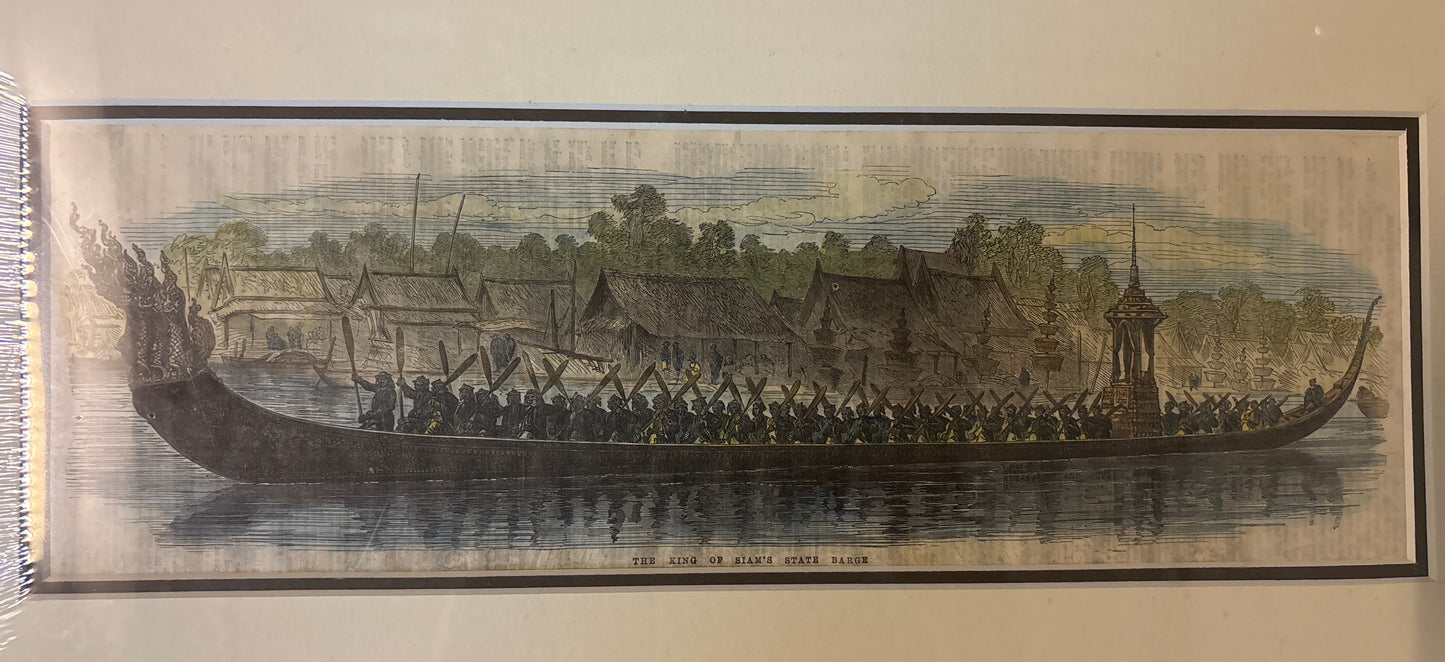
King of Siam’s State Barge - ILN 1855
King of Siam’s State Barge - ILN 1855
Title: The King of Siam’s State Barge
Origin: London, United Kingdom
Date: c. 1855–1860
Technique: Hand-coloured wood engraving
Source: The Illustrated London News
A Procession of Divine Majesty For centuries, the Royal Barge Procession on the Chao Phraya River has been the ultimate display of the Thai monarch's status. This print tells the story of the mid-19th century under the reign of King Mongkut (Rama IV), a period when the Kingdom of Siam was skillfully navigating the pressures of Western colonialism.
The barge depicted is a masterpiece of maritime engineering and spiritual symbolism. Powered by dozens of synchronized oarsmen, these vessels were designed to resemble mythical creatures from Hindu and Buddhist cosmology. The sight of a fleet of such barges, shimmering in gold leaf and reflected in the river, was meant to project an image of an "Earthly Deva"—a king whose power was divinely ordained. This specific print allowed a Victorian audience in London to witness the grandeur of a kingdom that refused to be eclipsed by European influence.
Chronicles of the Print
-
The Royal Navy of the River: The barge shown features a towering, ornate pavilion (Busabok) at the stern, where the King or sacred Buddha images would be seated. This elevated position ensured the monarch was physically and symbolically above everyone else.
-
Mythical Iconography: The prow of the barge is sculpted into the likeness of a legendary creature—likely the Suphannahong (Golden Swan) or a Naga (serpent). These figures were believed to protect the vessel and its royal passenger.
-
Siam through British Eyes: Published in the Illustrated London News, this print was part of a wave of "Exotic" reportage. It documented the 1855 Bowring Treaty mission, which opened Siam to free trade with Britain and brought Thai culture into the British consciousness.
-
Chao Phraya Background: In the background, you can see the traditional stilt houses and temple spires (Prang) that lined the banks of "The River of Kings," providing a rare architectural snapshot of 19th-century Bangkok.