Treasures of the Orient
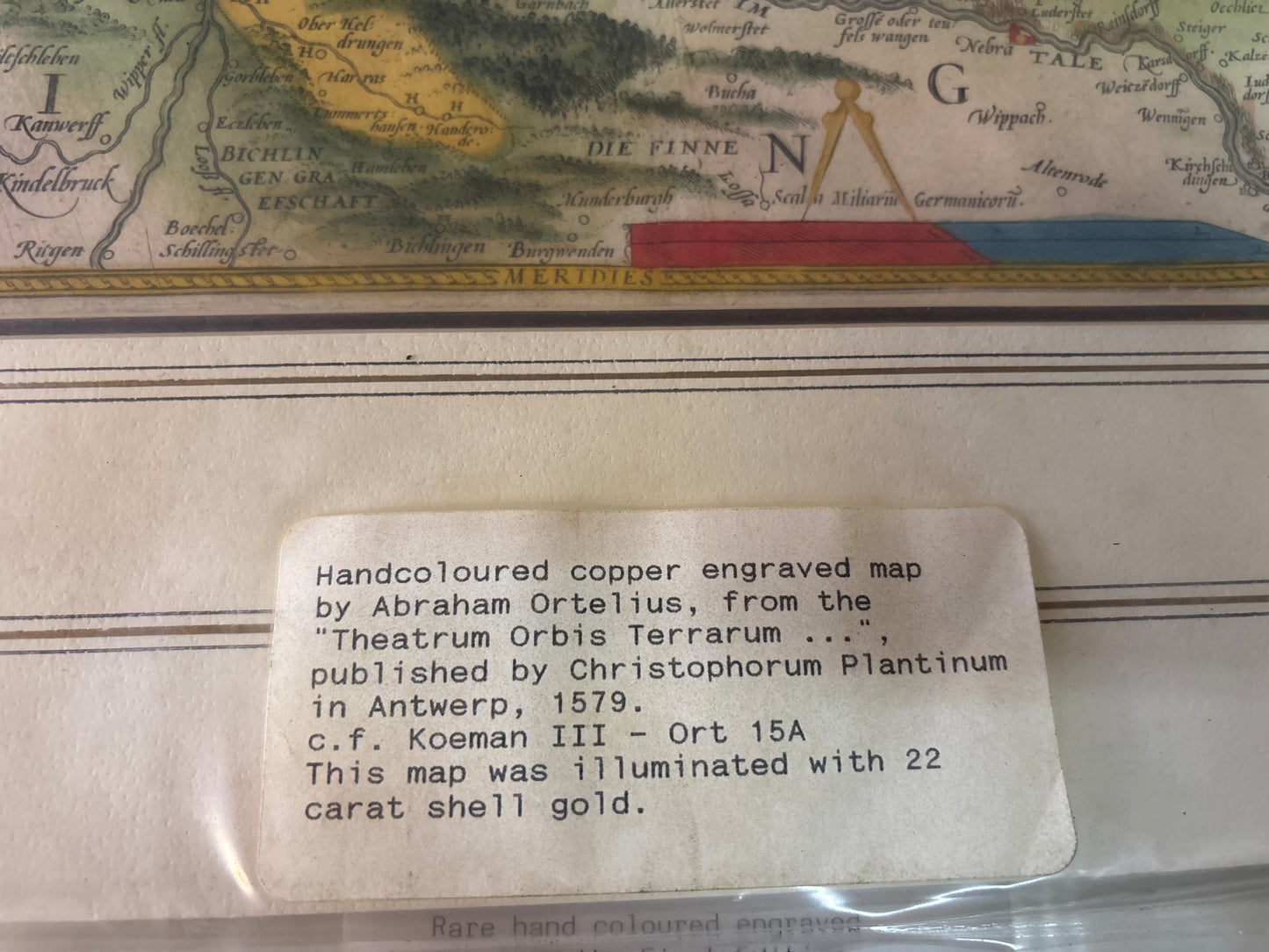
Mansfeldiae Comitatus Descriptio. - Ortelius 1579
Mansfeldiae Comitatus Descriptio. - Ortelius 1579
Mansfeldiae Comitatus Descriptio
Drawn by: Abraham Ortelius (after Tilemann Stella)
Published in: Antwerp
Year: 1579 (First appearance in this edition)
From: Theatrum Orbis Terrarum
Condition: Features rare shell gold embellishments; mat board.
A Renaissance Masterpiece of German Geography
This 1579 engraving by the legendary Abraham Ortelius is one of the earliest and most detailed depictions of the County of Mansfeld (now part of Saxony-Anhalt, Germany). Based on the pioneering survey by Tilemann Stella, the map is a hallmark of the first modern world atlas, representing the pinnacle of 16th-century cartographic precision.
The "Shell Gold" Distinction
This specific example is exceptionally rare due to the use of shell gold (powdered gold leaf mixed with a binder). This luxurious technique was reserved for high-status, custom-commissioned copies of the Theatrum Orbis Terrarum. The gold is typically applied to:
- The Elaborate Cartouches: Highlighting the intricate Renaissance strapwork and flourishes.
- Cities and Fortifications: Elevating the visual importance of the castles and walled towns throughout the region.
- Heraldry: Accenting the aristocratic symbols that define the county's political boundaries.
Historical Context
The region of Mansfeld was of immense significance in the 16th century, primarily as a major center for copper and silver mining, which fueled the European economy. It is also famously known as the home of Martin Luther, whose birthplace and influence are intrinsically tied to this landscape.
A Collector’s Rarity
Ortelius' maps are prized for their artistry, but the addition of shell gold moves this piece from a standard atlas plate to a museum-quality treasure. It reflects the immense wealth and prestige associated with map ownership during the Age of Discovery.