Treasures of the Orient
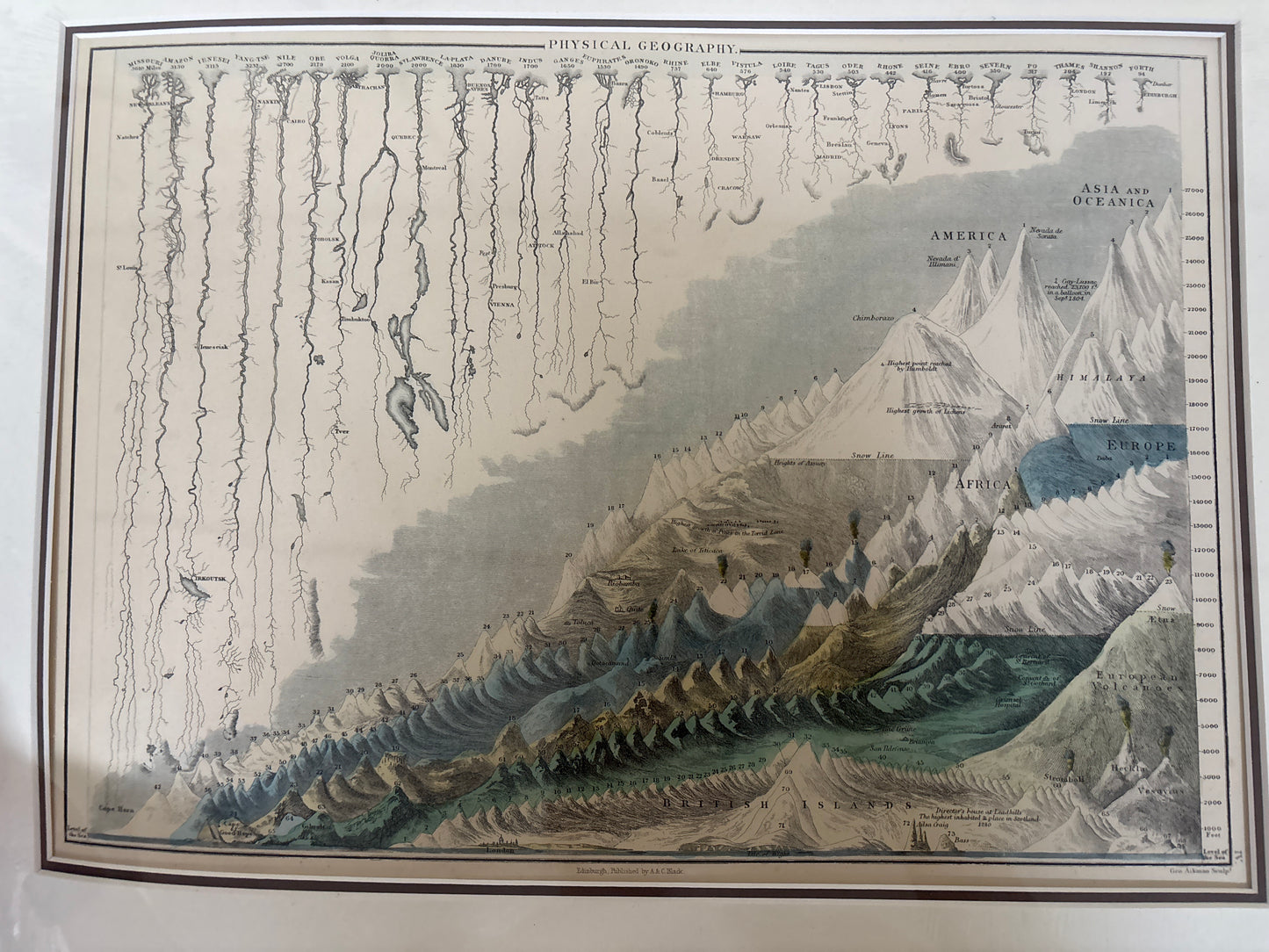
Comparative View of the Principal Mountains and Rivers of the World - Aikman c.1850
Comparative View of the Principal Mountains and Rivers of the World - Aikman c.1850
A. & C. Black’s Comparative Physical Geography (c. 1850–1860)
Title: Physical Geography: Comparative View of the Principal Mountains and Rivers of the World
Publisher: Adam & Charles Black
Engraver: George Aikman
Origin: Edinburgh, Scotland
Date: c. 1850–1860
Technique: Steel engraving with original hand-colouring
The Narrative: Nature Measured and Ranked
This striking "comparative" chart is a masterpiece of Victorian-era information design, capturing a time when global exploration and the classification of the natural world were at their peak. Published by the same house that managed the Encyclopaedia Britannica, this print serves as a visual encyclopedia, allowing for the immediate comparison of the world's most formidable natural wonders on a single horizontal plane. It is a snapshot of geographical knowledge just before (or during) the final confirmation of Mount Everest's height, reflecting the intense scientific curiosity of the mid-19th century.
Chronicles of the Print
-
The Waterfall of Rivers: On the left and across the top, the world’s major river systems—including the Amazon, Nile, and Mississippi—are "unrolled" into vertical lines, allowing for a direct visual ranking of their lengths from source to sea.
-
The Staircase of Peaks: The right side of the sheet features a staggered arrangement of the highest mountains from Asia, America, Africa, and Europe.
-
Scientific Annotations: The chart identifies the "Snow Line" for various regions and includes specific landmarks, such as the highest point reached by a balloon or the "Highest growth of Lichens".
-
Historical Geography: It meticulously labels legendary peaks such as Chimborazo (then thought to be the highest in the Americas) and the early surveyed giants of the Himalaya.
-
Expert Engraving: Executed by the skilled Edinburgh engraver George Aikman, the print features crisp detail and delicate hand-colouring used to distinguish continental groups.