Treasures of the Orient
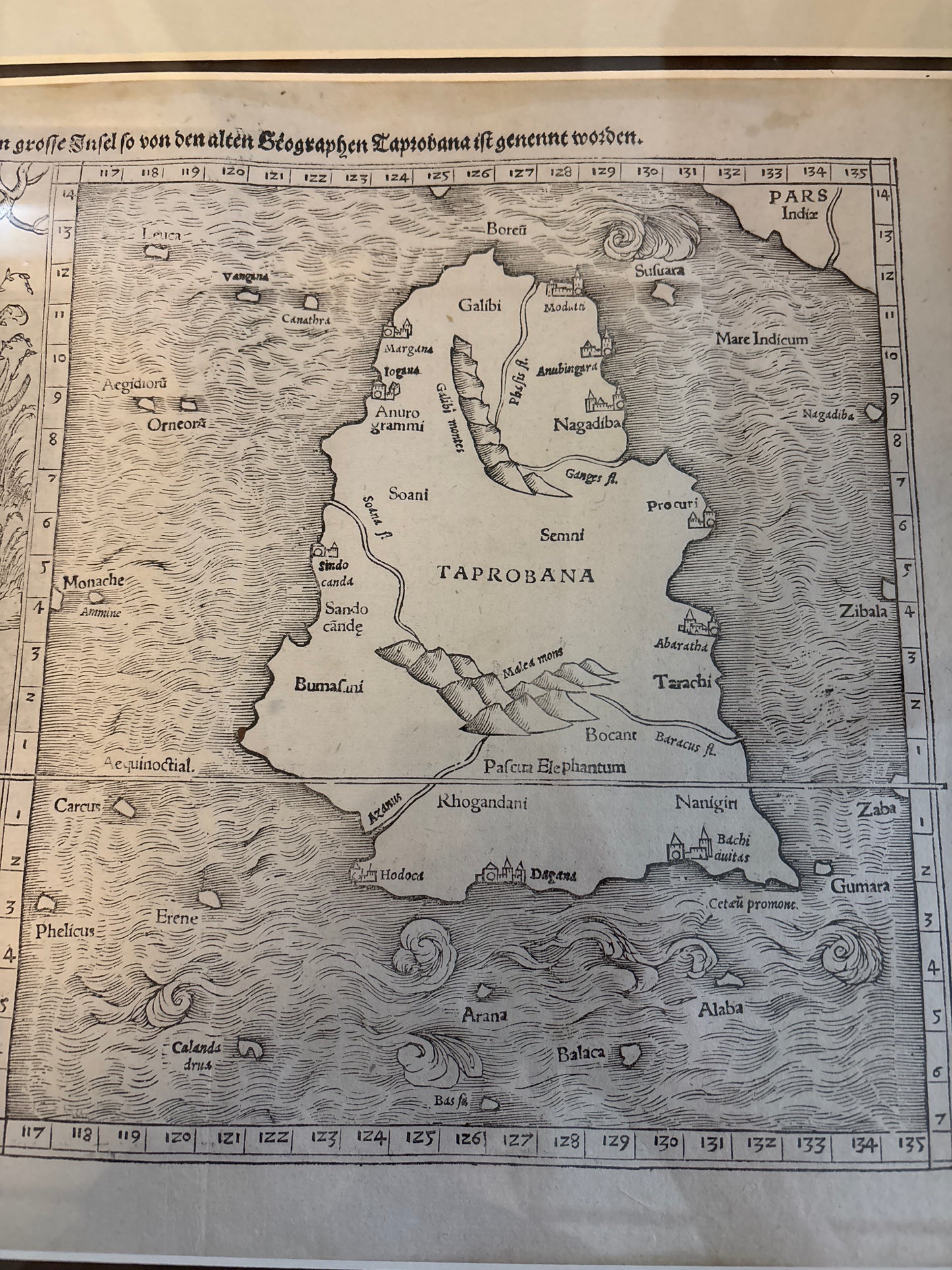
Sumatra - Munster c. 1540
Sumatra - Munster c. 1540
Title: Sumatra ein grosse Insel so von den alten Geographen Taprobana ist genennt worden (Sumatra, a large island which was called Taprobana by the ancient geographers)
Cartographer: Sebastian Münster (1488–1552)
Published: Basel, from Cosmographia Universalis, c. 1540–1588
Technique: Woodcut engraving
Description: A foundational map of the Southeast Asian archipelago, representing one of the earliest obtainable maps of Sumatra. Münster, a scholar and polymath, famously confused the ancient name "Taprobana" (usually associated with Sri Lanka) with Sumatra, a common geographical error of the 16th century that persisted for decades.
The map is famous for the large, charming woodcut illustration on the left depicting an elephant, reflecting the European fascination with the exotic wildlife of the East. The German text in the cartouche below the elephant discusses the local trade in pepper and other spices, citing the accounts of the Italian traveler Ludovico di Varthema.
Key Features:
-
Early Woodcut Style: The map features the bold, sturdy lines characteristic of 16th-century woodblock printing, which predates the finer copperplate engravings of the 17th century.
-
Exotic Imagery: The elephant illustration makes this one of the most visually recognizable and "iconic" maps for collectors of early Southeast Asian history.
-
Historical Error: The map labels Sumatra as "Taprobana," providing a fascinating look at the evolution of geographical knowledge during the Age of Discovery.