Treasures of the Orient
Tabula Asiae XI
Tabula Asiae XI
Title: Tabula Asiae XI
Cartographer: After Claudius Ptolemy / Likely Girolamo Ruscelli or similar 16th-century engraver
Published: Mid-to-late 16th century (c. 1561–1574)
Technique: Woodcut or copperplate engraving (depending on the specific edition)
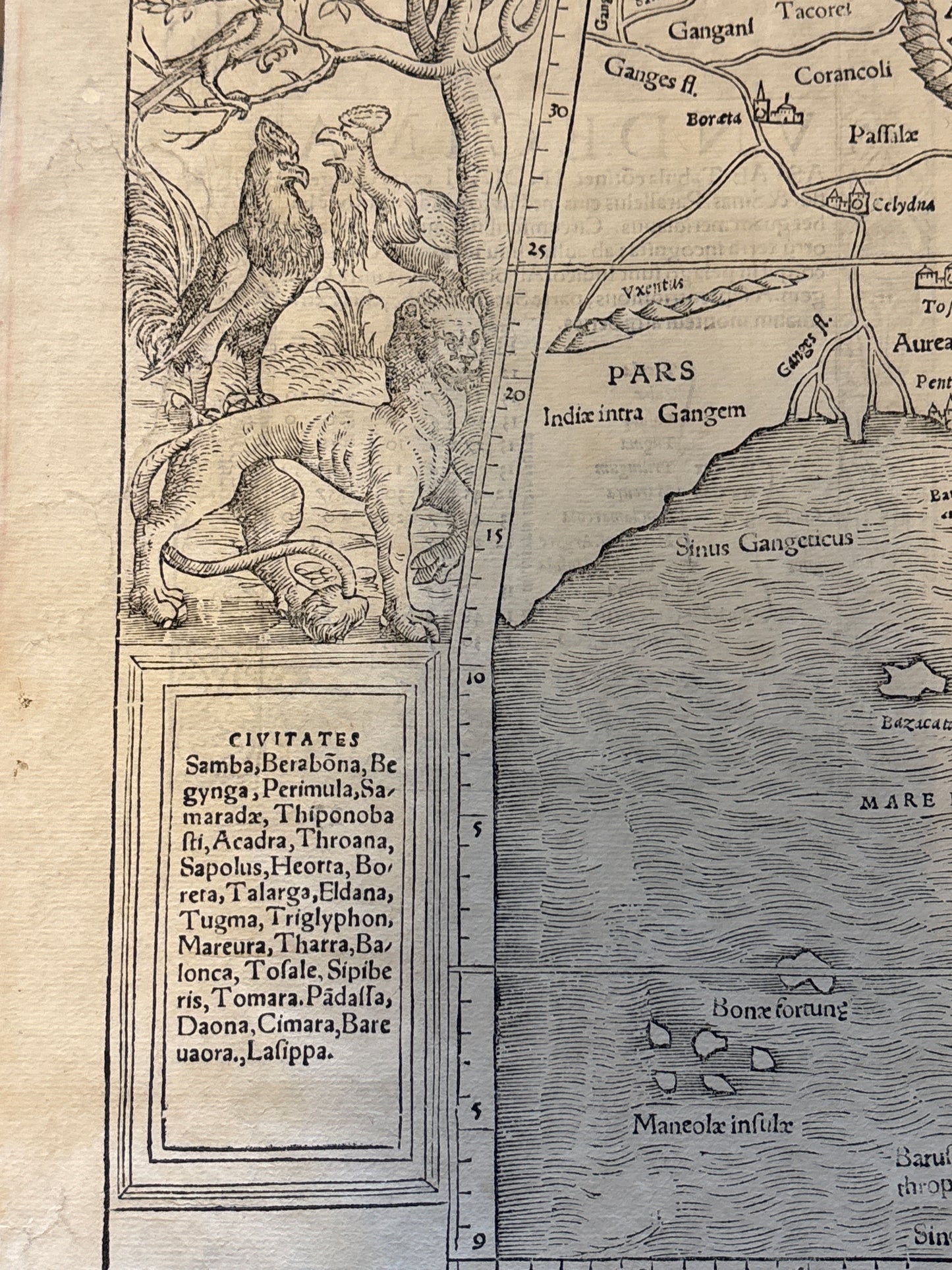
Description: This map represents the Eleventh Map of Asia as described in the seminal 2nd-century work Geographia by Claudius Ptolemy. It depicts the regions of India Extra Gangem (India beyond the Ganges) and Sina (China), covering modern-day Southeast Asia, including the Malay Peninsula (shown here as the Aurea Chersonesus or "Golden Chersonese").
A striking feature of this particular edition is the large, imaginative woodcut illustration on the left margin, depicting exotic wildlife including a lion, a cockatrice, and a parrot. The text above the illustration notes that this land "has tigers, parrots, and more." This combination of classical geography and whimsical Renaissance illustration makes it a highly decorative and historically significant piece.
-
Authenticity: Original 16th-century engraving.
-
Historical Significance: One of the earliest printed visualizations of the Southeast Asian mainland and the Malay Peninsula based on ancient Greek knowledge.
-
Decorative Elements: Features a prominent vertical panel of terrestrial and mythical animals, a rare addition even among Ptolemaic maps.