Treasures of the Orient
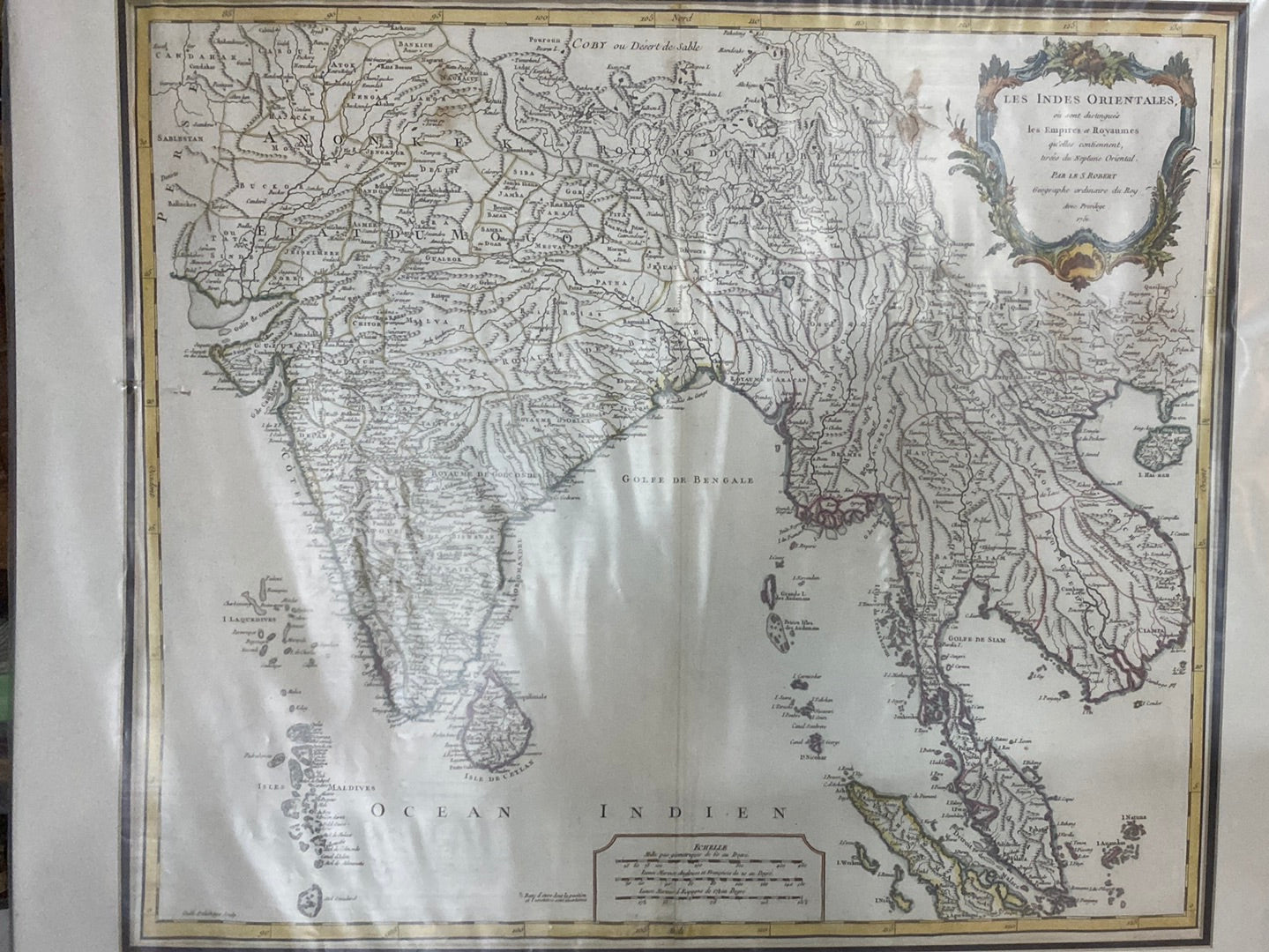
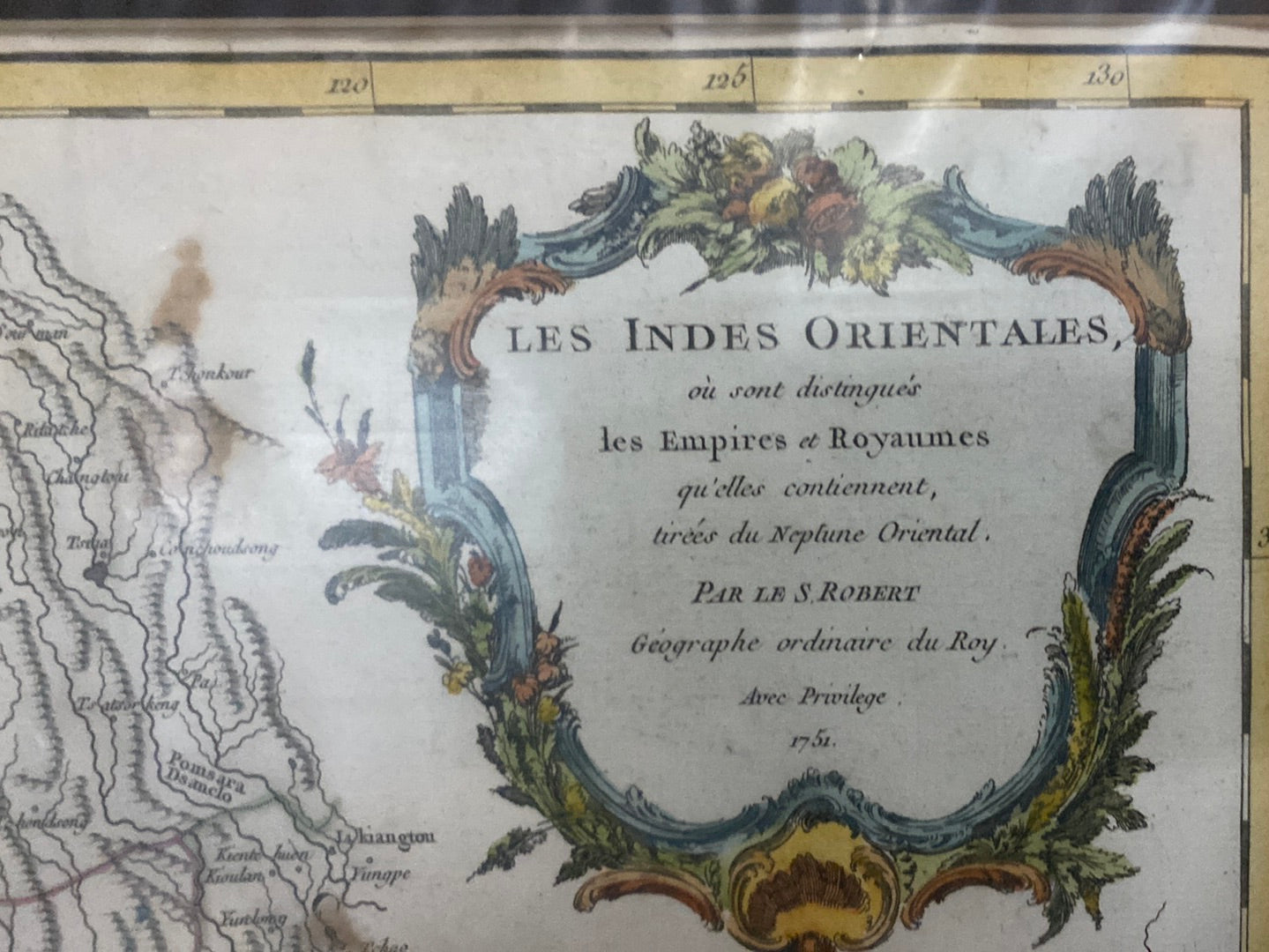
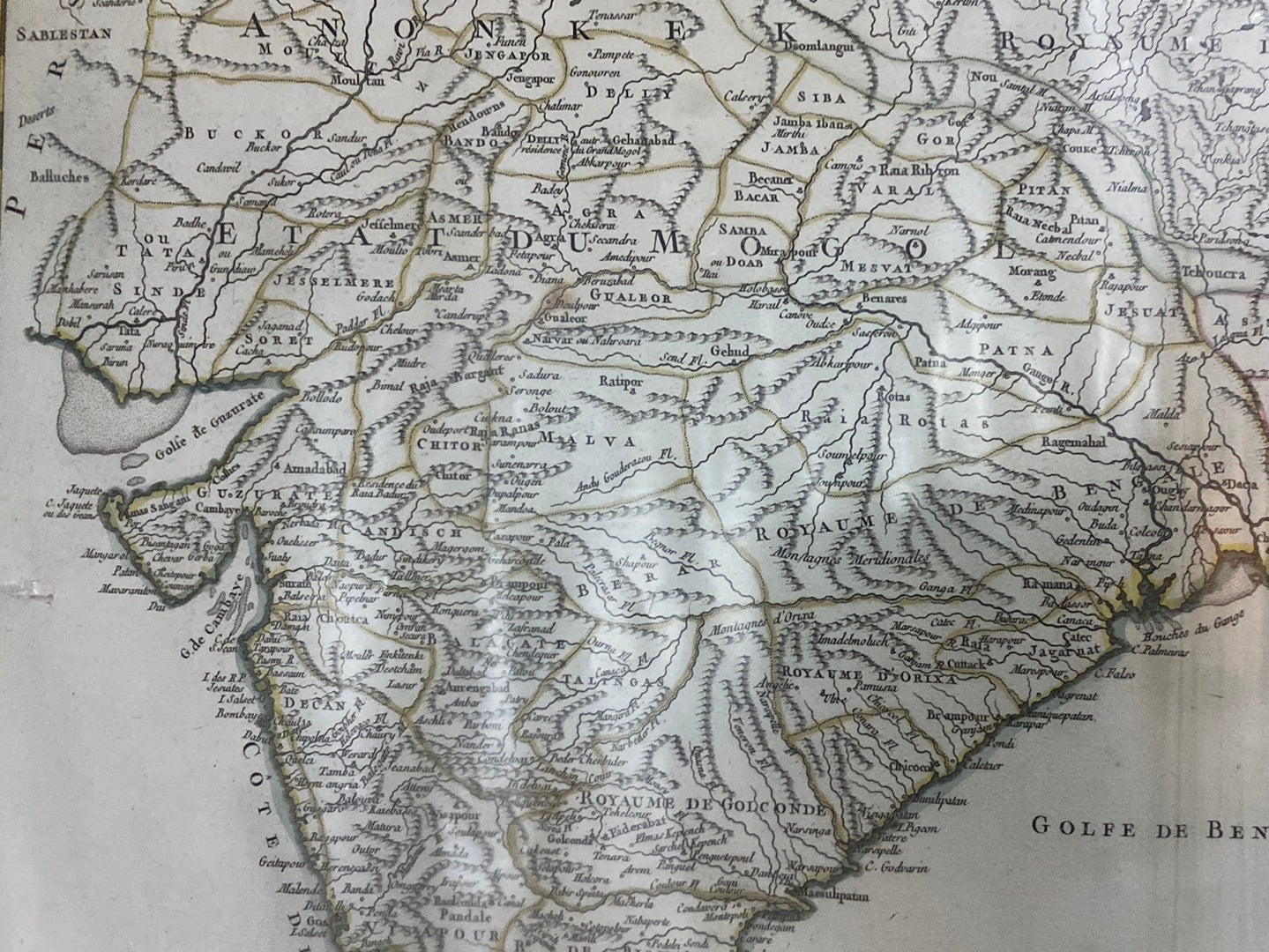
Les Indes Orientales (East Indies Map) - Robert de Vaugondy, 1751
Les Indes Orientales (East Indies Map) - Robert de Vaugondy, 1751
Les Indes Orientales (The East Indies)
Drawn by: Robert de Vaugondy (Gilles & Didier Robert de Vaugondy)
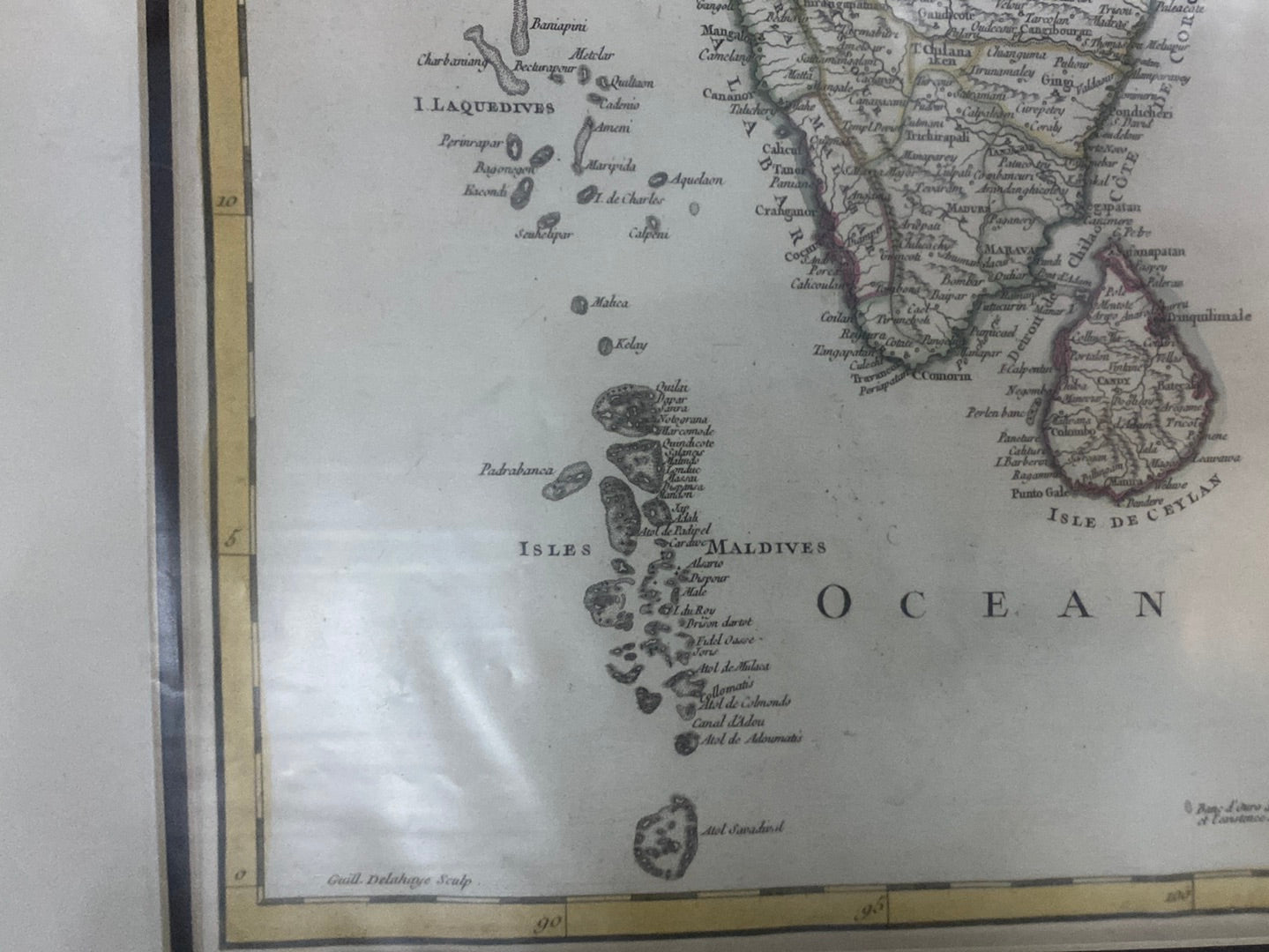
Engraved by: Guillaume-Nicolas Delahaye
Published in: Paris
Year: 1751
From: Atlas Universel (First published in 1757)
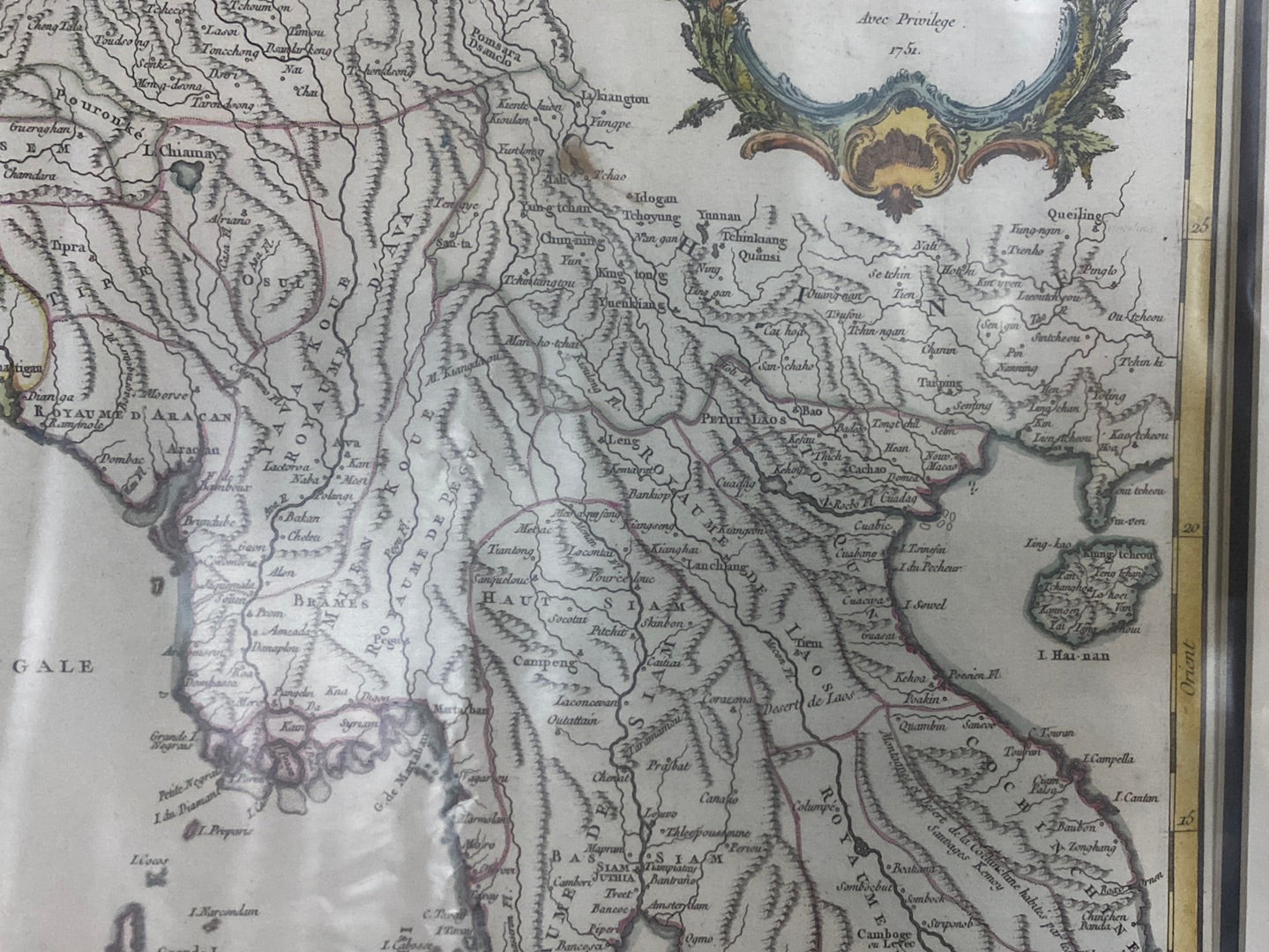
Condition: Original outline coloring; decorative Rococo-style title cartouche in the upper right, professionally matted.
A Masterpiece of French Enlightenment Cartography
This beautiful 1751 map by the renowned father-son team Gilles and Didier Robert de Vaugondy offers an extensive view of the Indian subcontinent and Southeast Asia. Descendants of the great Nicolas Sanson, the Vaugondys were famous for their scientific approach, utilizing the latest explorers' journals and astronomical readings to create more accurate charts.
The Mythical Lake of Chiamay
One of the most fascinating features of this map is the inclusion of the apocryphal Lake of Chiamay. Early cartographers believed this massive inland lake was the common source for four major Southeast Asian river systems: the Irrawaddy, Brahmaputra, Chao Phraya, and Dharla. Although it was entirely fictional, the myth of Lake Chiamay persisted on European maps until at least 1751 (and later in reprints) before being dispelled as geographical knowledge of the interior improved.
Sincapour
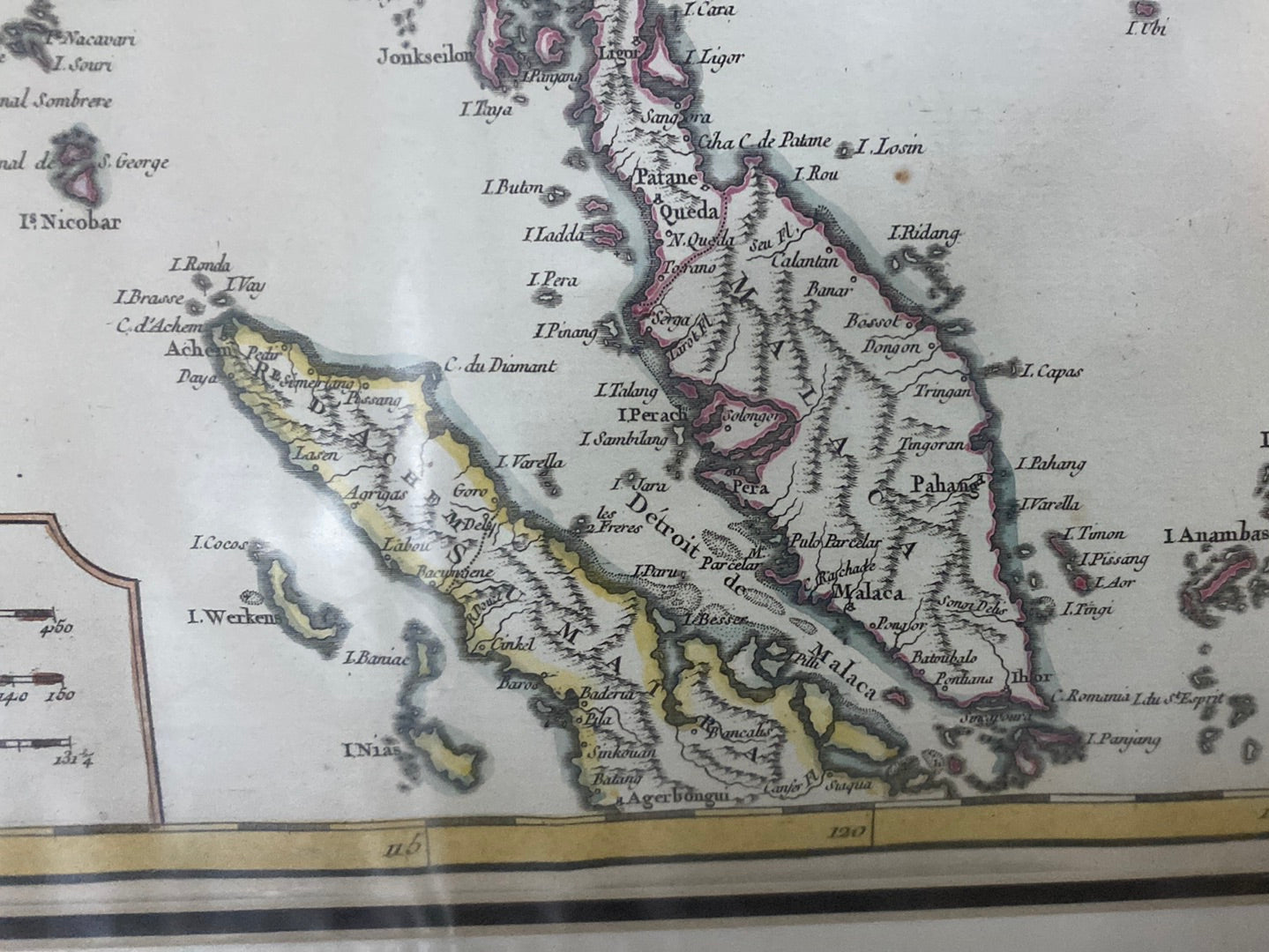
Despite the small scale, the island of Singapore is specifically identified as Sincapour. This highlights the island's enduring strategic importance along the "Oriental Neptune" trade route even decades before the official British settlement in 1819.
Historical and Geographic Scope
- Regional Detail: The map identifies countless cities, rivers, and states throughout Thailand (Siam), Burma, Laos, Cambodia, Vietnam, Malaysia, and Singapore.
- Offshore Precision: Notable detail is given to the Maldives and Sri Lanka (Ceylan), showcasing the era's improved naval intelligence.
- Artistic Merit: The title cartouche is a fine example of 18th-century French engraving, blending aesthetic elegance with scientific dedication.
