Treasures of the Orient
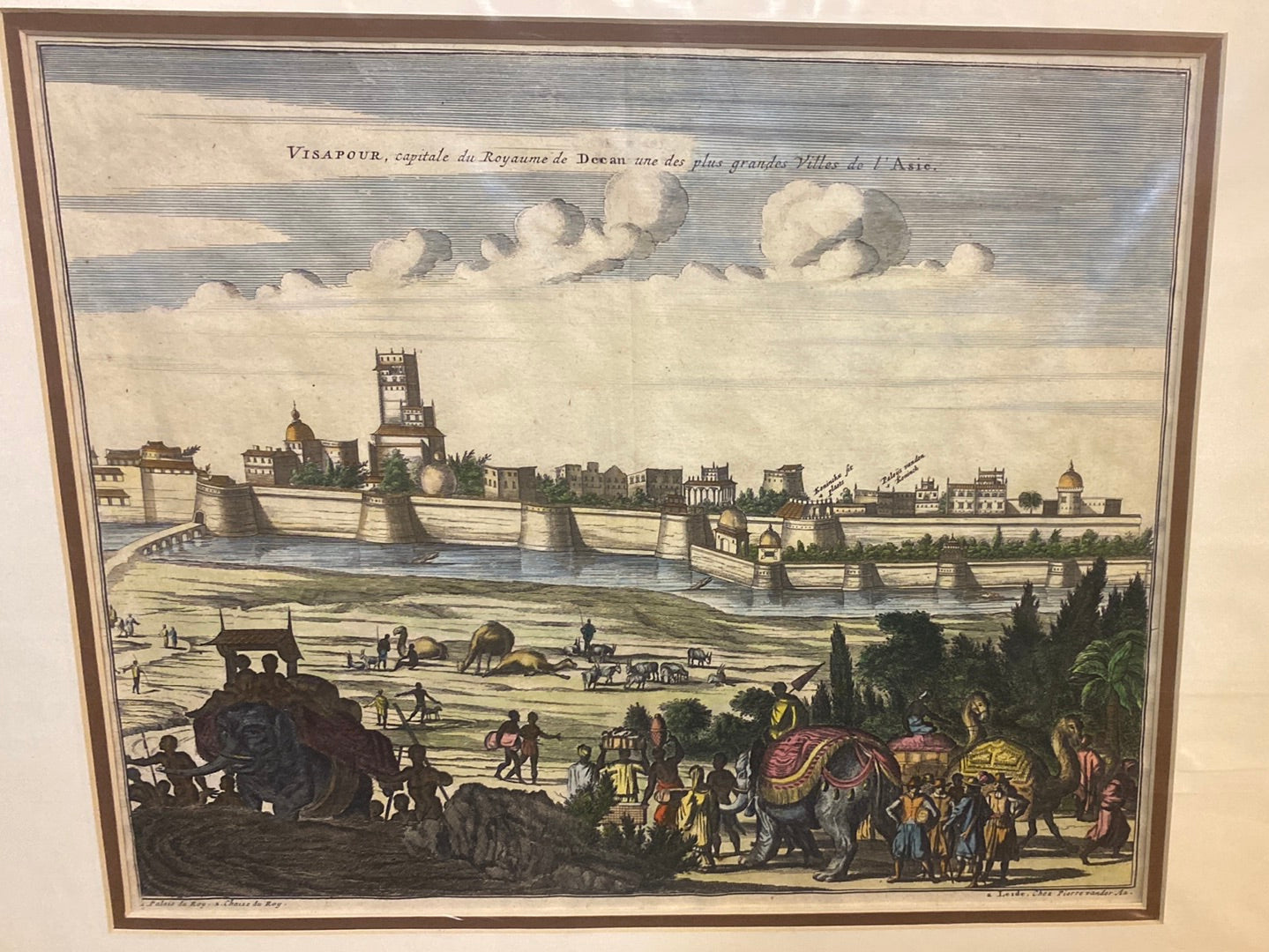
View of Bijapur - 1719 Pieter Van der Aa
View of Bijapur - 1719 Pieter Van der Aa
VISAPOUR, capitale du Royaume de Decan une des plus grandes Villes de l’Asie
Drawn/Published by: Pieter van der Aa
Location: Leiden, Netherlands
Year: 1719
From: La Galerie Agréable du Monde (The Pleasant Gallery of the World)
Condition: Fine hand-coloured copperplate engraving, professionally matted
A Grand Baroque View of the Deccan Capital
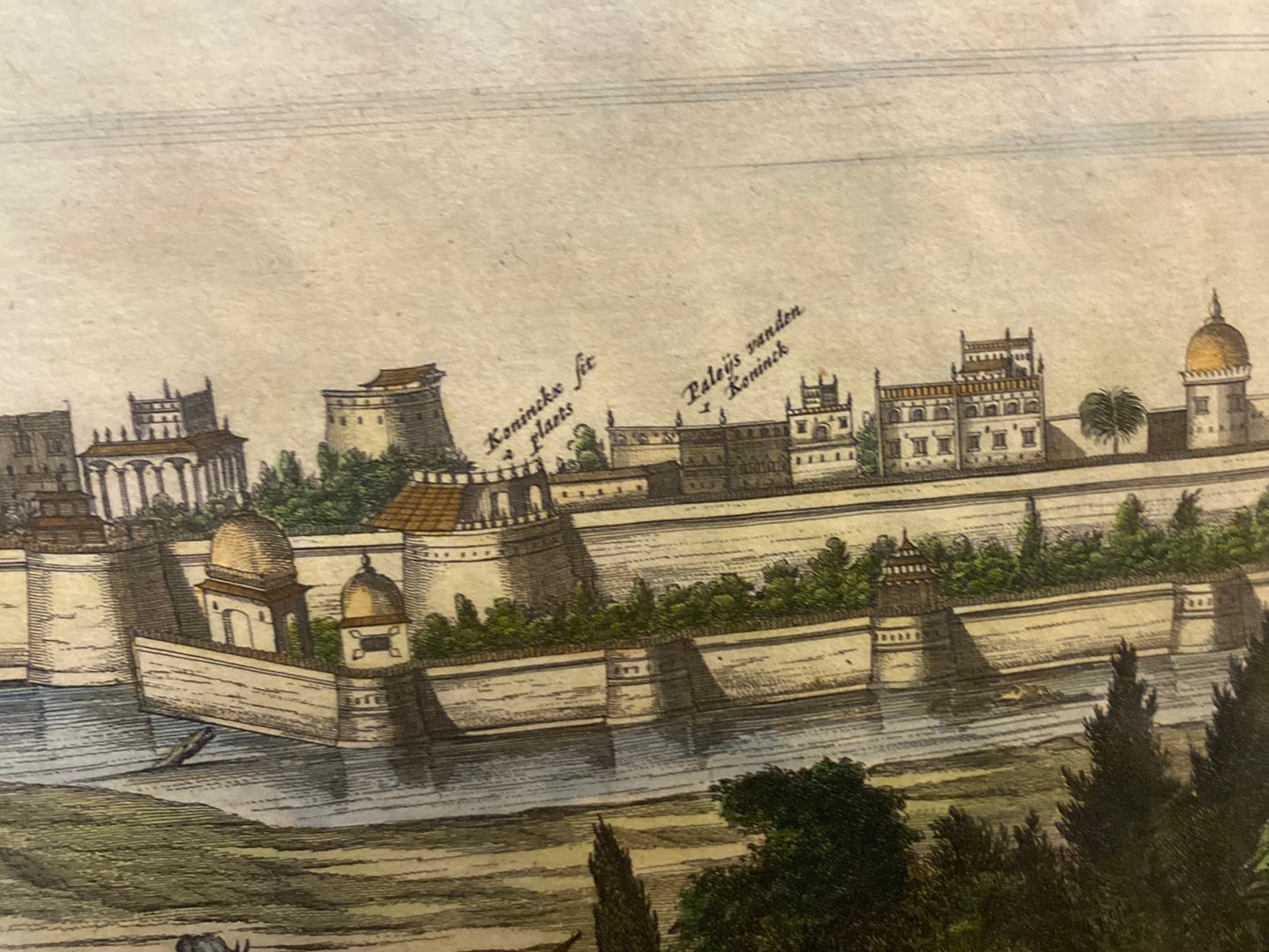
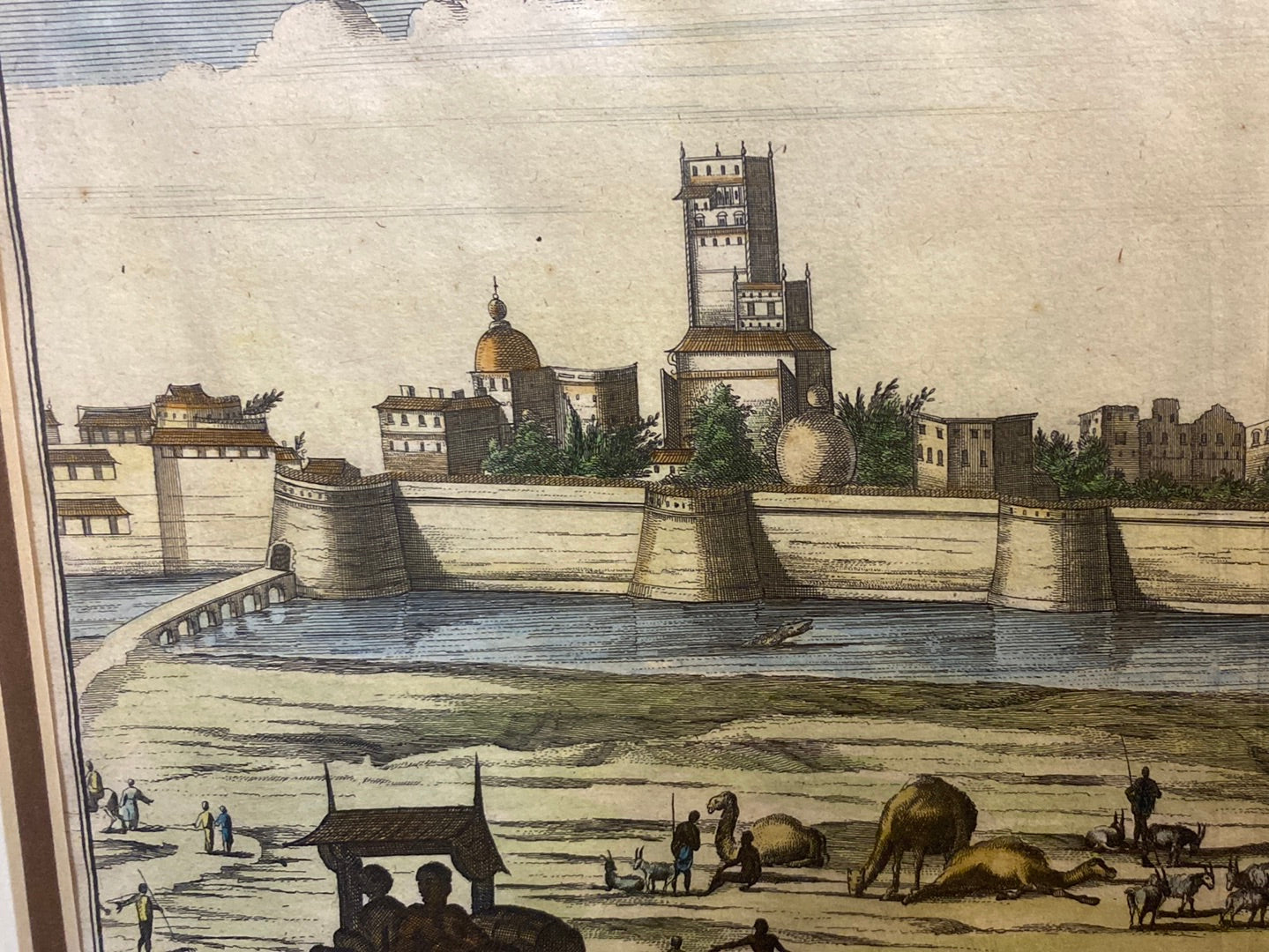
This 1719 engraving by the prolific Dutch publisher Pieter van der Aa captures a panoramic view of Bijapur (Visapour), once the magnificent capital of the Adil Shahi Sultanate. At the time of this printing, Bijapur was renowned in Europe as one of the most powerful and architecturally grand cities in all of Asia, serving as the heart of the "Decan" (Deccan) region of Southern India.
Exotic Detail and Architectural Grandeur
Van der Aa was famous for his massive Galerie Agréable, a collection designed to bring the wonders of the world to the libraries of the European elite. This particular view features:
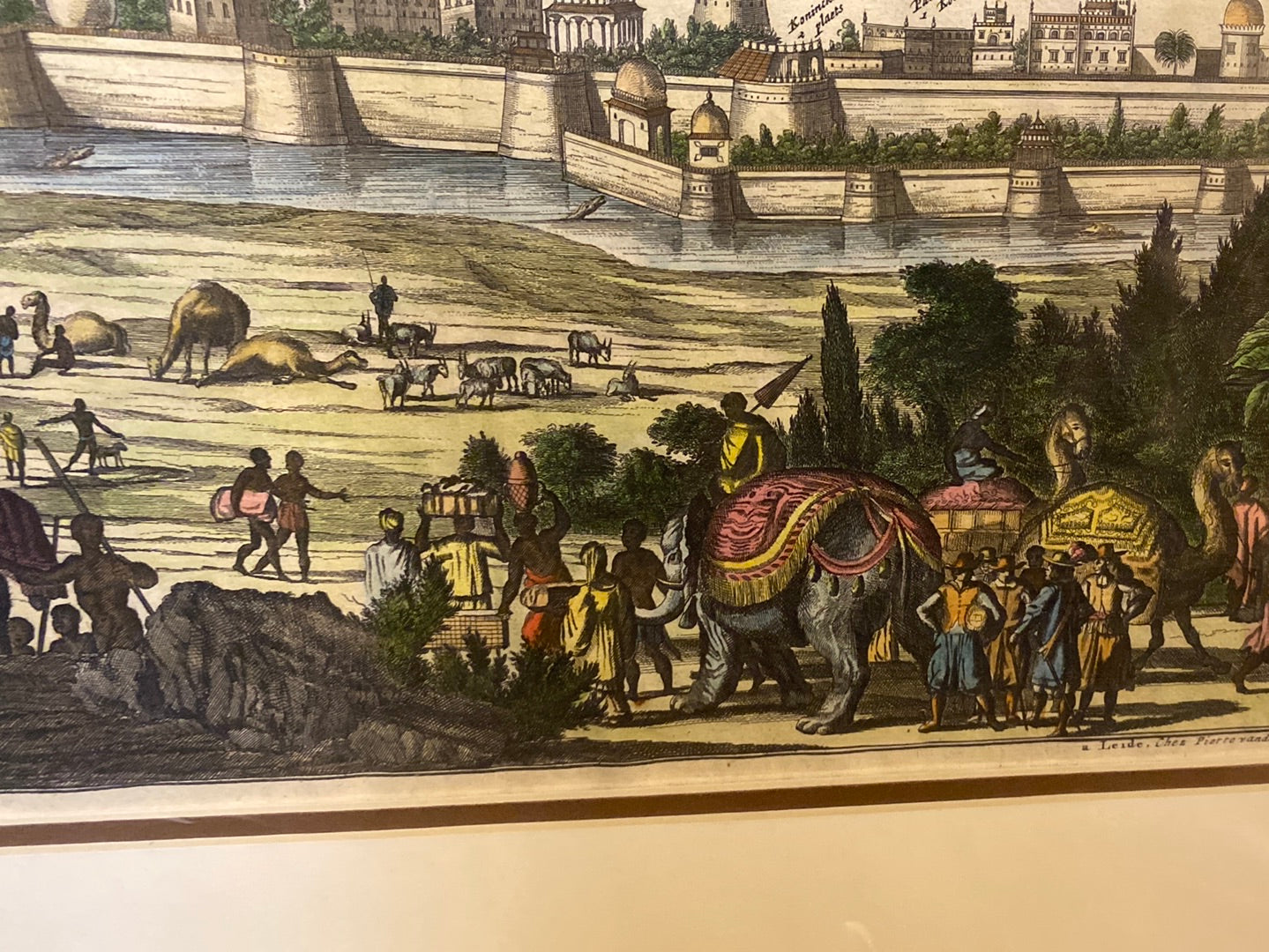
The Royal Procession: The foreground is filled with vivid ethnographic detail, showing a royal or military procession featuring war elephants and camels, illustrating the immense wealth and military might of the Deccan sultans.
- Fortifications & Citadels: The city is depicted behind massive stone walls and bastions, reflecting the architectural prowess that produced some of India’s most iconic Islamic monuments, such as the Gol Gumbaz.
- European Interpretation: Like many 18th-century "Vues d'Optique," the image is based on the journals of early French and Dutch travelers (such as Jean-Baptiste Tavernier). It blends historical accuracy with the stylized, grand aesthetic favored by the Dutch Golden Age publishers.
A Monument of 18th-Century Travel Literature
This print is a significant record of the Western fascination with the Indian interior. It captures Bijapur at the height of its historical fame, just before the shift of regional power toward the Marathas and the British, making it a prized piece for collectors of Indo-Islamic history and early global travel art.
